History of Nine PBS
In 1951, when the Federal Communications Commission (FCC) asked mayors across the United States if their city would use a channel for educational television, St. Louis answered with a resounding yes.
As a result of the vision, hard work, and generous support of people across the community, KETC/Channel Number 9 went on the air in September 1954, one of the first public TV stations licensed to a community.
Thanks to St. Louisans and viewers like you, Nine PBS has served our region over the last 70 years as storyteller and trusted partner. We connect our community through compelling national programs, inspiring local stories, and engaging initiatives that help our region flourish. And we look forward to serving St. Louis and continuing to play a key role in building our community’s future for all.
The Concept
KETC/Channel 9 was conceived by the St. Louis Community as an innovative means to provide public education and dialogue on topics that affected civic life. It was a concept that required the vision of St. Louis citizens who realized that television – a relatively new public medium – had the potential to strengthen civic life. Those visionary citizens also believed that television could be supported by the community in the service of the community. The vision, commitment, collaboration, funding, and process required to make their concept a reality inspires Channel 9’s strategy for the future.
The Local Conditions
In 1951, when St. Louis mayor Joseph Darst appointed a committee that would become the St. Louis Regional Educational Television Commission, the population of the St. Louis metropolitan area was soaring and the economy was on the rise. Between 1950 and 1960 the population of St. Louis County would increase by 73%. By 1970 it would increase by an additional 35%. In the years following World War II the nation began to flourish in a spirit of optimism and growth that saw a progressive effect in business, education, and culture. St. Louis mirrored the nation. It was in this spirit that the founders of KETC/Channel 9 initiated educational television in St. Louis.
The Community Makes the Concept a Reality
Community support was critical to Channel 9 from its inception. The three years leading up to Channel 9’s first broadcast were challenging, but the need for educational television had been recognized, and the community was determined. Among the influential founding members of the commission was Arthur Holly Compton, president of Washington University and a Nobel Prize-winning physicist. Also on the committee were the Reverend Paul C. Reinert, president of St. Louis University, Arthur B. Baer, president of Stix Baer and Fuller, and Ray Wittcoff, a promising young businessman. Filmmaker Charles Guggenheim was appointed general manager, but by the time of Channel 9’s first broadcast, Martin Quigley had assumed the position. Channel 9 received its KETC call letters from the FCC, but needed additional funds move forward. Support came from the community when PTA members from more than 100 school districts went door to door to raise the $100,000 Channel 9 needed. Schools were so eager for televised programs in classrooms that 25 school districts offered to pay Channel 9 for its services at $1 per student. By the fall of 1954, Channel 9 was ready for its first broadcast.
Channel 9 Goes On the Air
At 9:00 p.m. on September 20, 1954, Channel Number 9 went on the air in a black-and-white broadcast from a temporary studio in the women’s gymnasium of Washington University’s McMillan Hall. After a welcome from Martin Quigley, and the station’s board chairman, Arthur Holly Compton, Channel 9 broadcast its first program, The Second Opportunity, a play that dramatized the necessity of free thought in society. Six months after Channel 9 went on the air, Powell B. McHaney, president of St. Louis Civic Progress, said: “KETC has become an important community institution. It has demonstrated its enormous potential value as a means of improving the quality of instruction in our schools, of providing our young people with helpful entertainment, and of bringing to a significant adult audience stimulating and unfettered discussions of public affairs and the elements of liberal education. It has made an excellent beginning.”
Channel 9 Moves into the Julius and Freda Baer Memorial Building
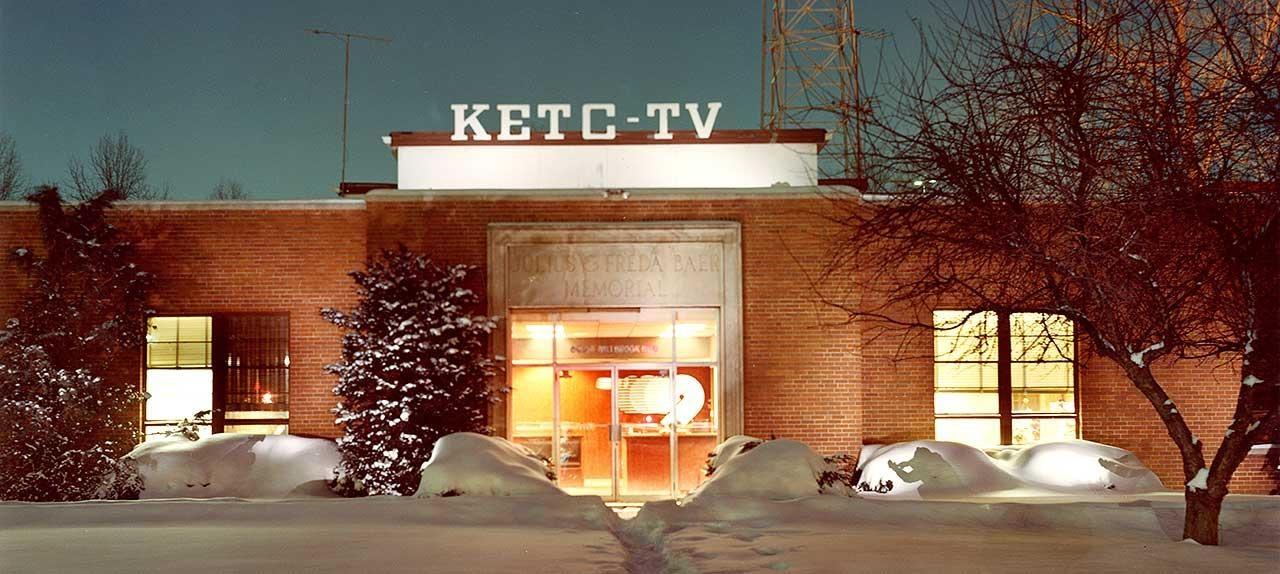
Only one year after its first broadcast, Channel 9 moved into its own building on the northwest edge of the Washington University campus. Funded by Arthur B. Baer and named in honor of his parents, the Julius and Freda Baer Memorial building was the first in the nation to be constructed specifically for educational television, and it would remain Channel 9’s home for the next 43 years. St. Louis artist Fred Conway was commissioned to paint a mural in the entrance. The mural’s title said it all: “Education Through Television.”
Channel 9 Acquires Members
Financial trouble struck again in the late 1950s, and Channel 9 was forced to reduce staff, cancel evening programming, and go off the air during the summer. This time, when door-to-door collections failed to provide the necessary funds, Channel 9 began to solicit $10 memberships, and financial stability was ultimately restored. Membership became and remains Channel 9’s primary source of revenue.
Channel 9’s First Local Productions
Channel 9’s first focus in local production was to provide better children’s programming than what was currently available on the networks. At that time, the only programs for children were features such as Kukla Fran & Ollie, Captain Video, Watch Mr. Wizard, and Lassie. The time was right for Channel 9 to produce innovative children’s programming of its own. Over the ensuing years, the station’s remarkable successes included The Finder, Room Nine, One-Two-Three, That’s What It’s All About, A Special Kind of Morning, and The Letter People. With higher education on the rise, it was also time for Channel 9 to produce programs for college credit. The phenomenal success of the station’s first locally produced telecourse, Religions of Man, started a tradition of locally produced telecourses that would continue through the 1970s until nationally produced telecourses became readily available.
Channel 9’s Mandate for Community Engagement
In the station’s first annual report the founders stated: “The commission’s policy is to promote civic education by encouraging full and forthright discussion of public issues on KETC.” This mandate would soon result in public affairs programming that raised awareness of local matters and addressed civic issues such as zoning, integration, the Salk vaccine, wire tapping, rats, the Daniel Boone highway and sewer problems. As time went on, the union of local and national programming would encourage more expansive community engagement.
PBS Begins Operation
In 1969, the year of Woodstock and the moon landing, the nation was on the eve of an event that would change the country’s concept of what was possible through television. Two years earlier, the Public Broadcasting Act had created the Corporation for Public Broadcasting to dispense annual federal appropriations for public television. In 1970, when PBS began operation, the idea that television could help prepare children for school was innovative. So too was the idea that art, culture, literature, science, and history could be successfully delivered by satellite into the homes of citizens throughout the nation. By the mid-1970s, PBS programs such as Sesame Street, Masterpiece Theatre, The French Chef, and National Geographic specials were reaching a vast audience.
Channel 9 Expands its Broadcast Capabilities
In 1970 Channel 9 completed construction of a high-power color transmission center in South St. Louis County, and in 1971 began color transmission. In 1974, the station began broadcasting on Saturday mornings, then in 1976 added Saturday nights and Sunday mornings, and by 1977 Channel 9 was broadcasting from 8:00 a.m. to 3:00 p.m. in non-school periods. In 1978 Channel 9 became one of the first PBS stations to receive programs via the Westar I Satellite. In 1980 Channel 9 began broadcasting selected programs with closed captions for the hearing impaired and by 1987 was broadcasting designated programs in stereo. In the same year Channel 9 began to program cable television’s Higher Education Channel (HEC). And in 1990 the station began offering selected broadcasts with Descriptive Video Service (DVS) for the visually impaired. Finally, in 1991, Channel 9 began 24-hour broadcasting.
Missouri Supports the State’s Public Television Stations
In 1980 the Public Telecommunications Association of Missouri was formed to establish a statewide network that included St. Louis, Kansas City, Sedalia-Warrensburg and Springfield. That same year, the Missouri Legislature passed the Public Television Act for the appropriation of funds to the Missouri stations.
Channel 9 Seeks New Ways to Generate Revenue
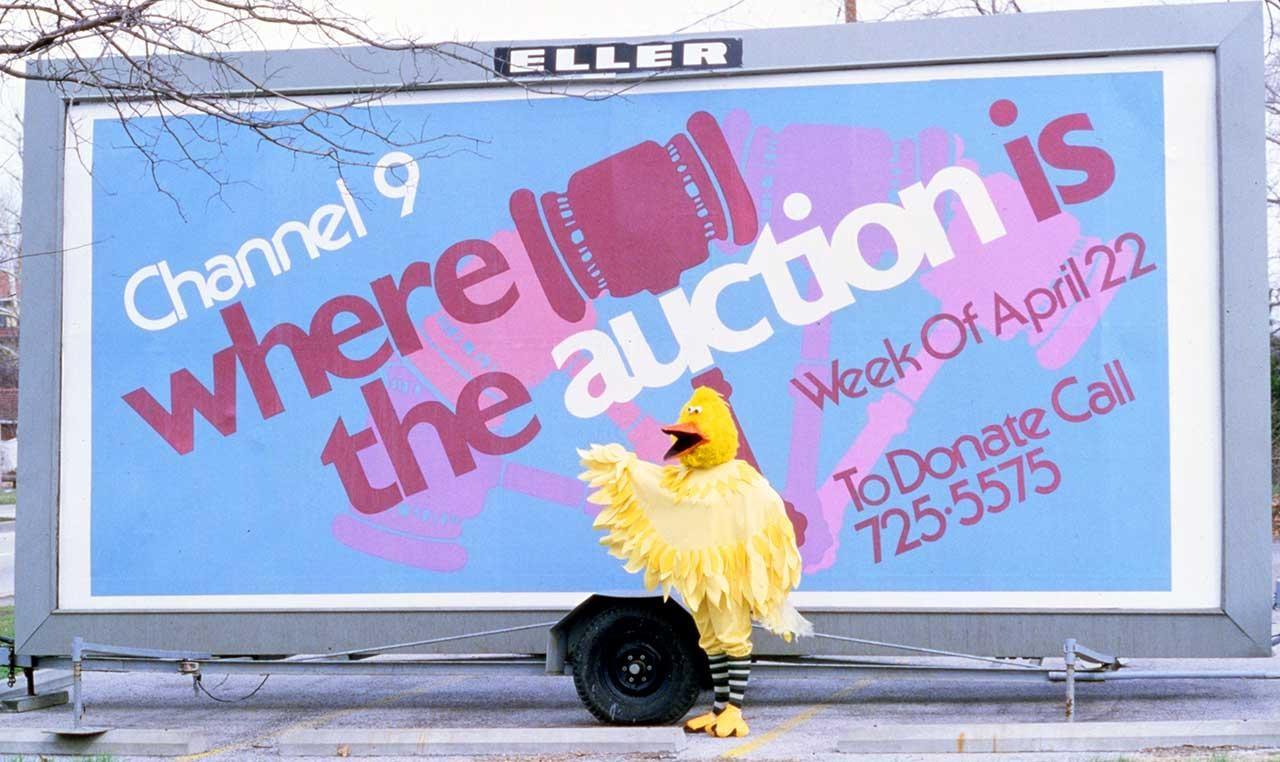
From Channel 9’s first solicitation of members in the late 1950s, membership has been the station’s primary source of revenue. Pledge drives have continued to be a primary means of generating financial support through memberships. For many years, ending in 1998, Channel 9 also generated revenue with on-air auctions, first partnering with the Camelot auction then by conducting its own on-air auctions. In 1982 Channel 9 created Video Nine, a for-profit production subsidiary that generates additional revenue for the station. Over its 25-year history, Video Nine has grown to become a significant revenue source and now serves production needs for several major St. Louis clients as well as Fox Sports.
Our Founding Vision and our History Inspire Our Future
The history of Nine PBS inspired our strategic thinking about the organization’s future. More than half a century ago the founders of KETC had a vision. They believed that broad public education and a community forum for public dialogue would strengthen civic life in St. Louis. They embarked into uncharted territory, willing to explore a new medium with the potential to serve their community at a time of challenge and opportunity. They wanted to enrich their community and address the issues that threatened its well being. Their resources were limited, but they were imbued by philanthropic zeal and a spirit of possibility.
The Transition from Educational Television to Public Television
The founders of KETC/Channel 9 were successful educators and business leaders who understood that progress in a new age would require relentless innovation. They did not know how it would be done, but they knew why it should be done. With a groundswell of support from the community, they created and sustained one of our nation’s first educational television stations, and 14 years later would witness its evolution into a public television station known for its innovative programs. For nearly four decades, community support would sustain Channel 9 as a community-licensed affiliate of the national public broadcasting system.
Now, as Nine PBS, we are continuing to strengthen civic life in the St. Louis region. Since our inception, we have helped bring St. Louis together as we connected the region with the world and the world to St. Louis. We are also one the nation’s most watched public television stations; and we are nationally recognized for innovative local programs and initiatives that inspire and inform our community. Living St. Louis and Donnybrook are two of the most highly rated locally produced programs in public television. Newer series Arts America, Stay Tuned and Night at the Symphony have been recognized with Emmys; and even newer series like SciTechNow, the Domain Tech Report and Feast TV reflect important local, regional and national connections. It is impossible to imagine our nation without public television – or St. Louis without Nine PBS.
The Transition from Public Television to Public Media
The value of independent, noncommercial public media seems clear. We have the opportunity to hear many points of view. Our children experience the joy of learning. Adult programs are created with integrity. We are freed from commercial bombardment. We can get more information online. But what exactly is public media? And how is it different from television plus a website?
PBS now refers to itself as public media, including television viewers and website visitors in its weekly reach. Last year 211 million people watched their local PBS stations, making PBS the 5th most-watched network among all of broadcast and cable. And 33 million people visited PBS online. But public media encompasses far more than the one way process of viewing or visiting. Public media includes the interactive, multifaceted connections and online communities that can bring people together from around the city or around the world to engage in dialogue and share common interests. Today it is Facebook, YouTube and Twitter. Tomorrow it will be something new. Public media is evolving. Public media is a broad term that encompasses all the ways we can serve, engage and energize our community as an independent, noncommercial media organization.
The Power of Public Media
When we decided to embrace the tools of public media to tell the story of St. Louis during World War II, the territory was uncharted. There was no model to follow. Ken Burns’ series provided the catalyst for engaging the citizens of our region in the most extensive outreach initiative in our history. We didn’t know how public media could serve our citizenry, but we knew why we should explore its possibilities.
Your Stories: St. Louis Remembers World War II was about our community, and it was for our community. We turned to new platforms and new ways of connecting with people in search of the best tools for collecting stories and images. We engaged young volunteers to help us create intergenerational connections. We discovered new ways to share and preserve valuable content in a range of formats.
When we took on the mortgage crisis in 2008, we used every tool available to us, from television to Facebook, to church bulletins. Because of our initiative, more than 10,000 residents sought help to prevent foreclosure and we were asked to lead a national involving 75 public media organizations in 32 hard-hit communities across the country. Then in 2011, we took on national leadership of an initiative called American Graduate: Let’s Make It Happen, bringing focus and solutions to the dropout crisis, and the same year we addressed issues related to immigration in our Homeland initiative, which included a three-hour documentary that aired nationwide in 2012.
The appeal of new media options, only recently the purview of the younger generation, now transcends age demographics. Social networking enables and encourages people of all ages to make connections and pursue special interests in ways that were never possible before. Though scheduled viewing of traditional television is likely to endure for many years to come, the media landscape has changed forever. The horizon has expanded with opportunities and challenges.
The digital conversion has opened up even more opportunities and options. But we still need content we can trust; safe places where we can engage with one another and make valuable connections. We still need reliable sources of information and enrichment for ourselves and our children.
The challenge of public media parallels the challenge of educational television in its infancy: How do we use the medium for the public good? Just as public media offers immense opportunities for reaching new audiences with our content and serving existing audiences in new ways, it presents opportunities for expanding our founding role as a facilitator of public dialogue. Public media also presents the challenge of a rapidly changing economic model – for commercial and public broadcasting alike. Viewership, membership and funding sources will change. Our future in public media will require us to explore every potential with the spirit of possibility, the philanthropic zeal, and the relentless innovation exhibited by our visionary founders. But we believe the benefit to our community will be profound.
A Better Tomorrow
Nine PBS has been the most-watched PBS station in the U.S, with the highest percentage of households viewing, since 2020. While we’ve mastered television, the media landscape is constantly changing, and we are embracing the future of digital content. Streaming on the PBS App and Nine PBS Passport has exploded; new technology allows us to engage even more community members.
We now train educators and caregivers using PBS KIDS® media to improve educational outcomes for young learners. In April 2020, the COVID-19 pandemic necessitated at-home learning, so we quickly launched high-quality on-air lessons on Teaching in Room, a weekday series taught by local educators that can also be seen on our YouTube channel. The series amplified the voices of diverse educators and garnered a "What's Right in the Region" Award in 2022.
The Emmy-winning, multimedia literacy initiative Drawn In is a shining example of representing kids of color in media through the relatable genres of comic books and graphic novels. In other firsts, in 2020 Amy Shaw became the first woman to lead the organization in its history, we cobranded with the iconic PBS brand in 2021 to become Nine PBS, and launched our first original podcast, Listen, St. Louis with Carol Daniel, in 2023.
In 1954 our founders were innovative and determined. They experimented. They were on a quest for discovery. Today, as we celebrate our 70th year, we remain curious and committed to our role as a trusted hub of information. We are telling the stories that matter—stories that lift the community up and change the narrative by showcasing the positive steps being taken to build a vibrant St. Louis and a better future for all.